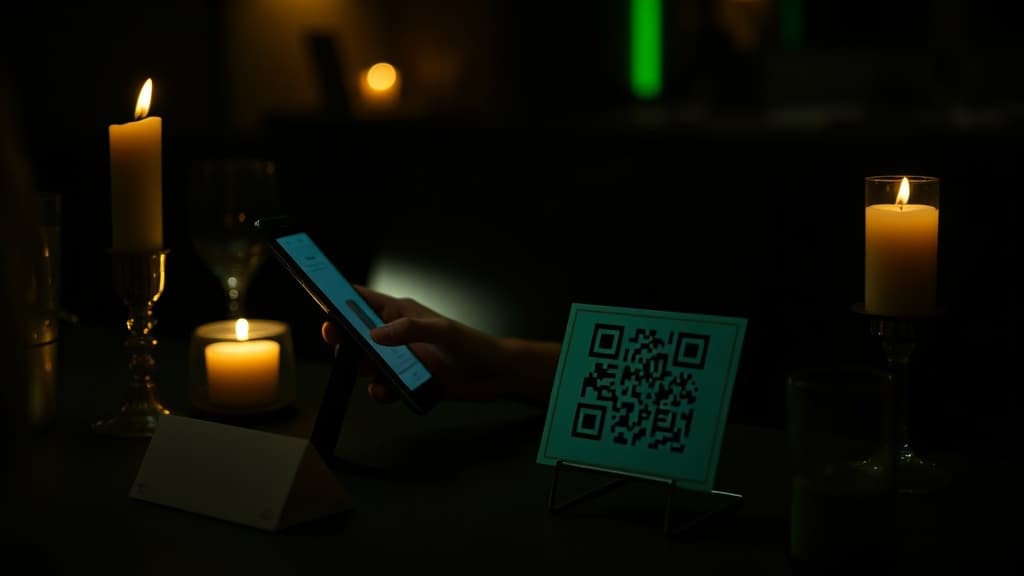
Turn great service into Google reviews (and better tips) with one QR
Here's an uncomfortable truth about restaurant marketing in 2026: your Google rating does more for bookings than your website, your Instagram and your PR combined. When someone searches 'restaurants near me' or 'best Sunday roast Wokingham', Google's local pack decides who they see, and review quantity, recency and rating are the levers that decide who ranks.
And here's the missed opportunity: every night, guests leave your venue delighted, tip their server... and tell nobody. The moment of maximum goodwill, right after great service, wallet already out, evaporates. One QR code can capture it twice: take the tip, then invite the review.
Why Google reviews are the #1 local-SEO lever
Local search runs on Google's local pack, the map plus three listings that sit above every organic result. Google has been consistent about what feeds it: relevance, distance, and prominence, with reviews the biggest prominence signal a restaurant can actually influence. Industry studies year after year put review signals among the top local ranking factors, and the consumer side is even starker, the overwhelming majority of diners read reviews before trying somewhere new, and most filter out anything under 4 stars.
The compounding maths is brutal for slow movers. A venue collecting 20 fresh reviews a month builds recency, volume and keyword-rich content ('the lamb shank was incredible') that a rival collecting 2 a month can never catch. Reviews are also the cheapest marketing you'll ever run: the inventory, happy guests, already exists in your dining room every single service.
The problem: happy guests don't review, annoyed ones do
Left alone, reviewing skews negative. A guest who had a lovely, unremarkable evening has no trigger to open Google Maps later; a guest with a grievance has a motive and a memory. That's how venues with 90% happy covers end up with a 4.1 rating driven by their angriest 2%.
The fix isn't begging ('Please review us!' on the receipt gets ignored), it's timing. Ask at the emotional peak, make it one tap, and ask the right people. The emotional peak in hospitality is the moment a guest decides to tip: they've just experienced the service, they're feeling generous, and their phone is literally in their hand.
A guest who has just tipped your server is the single most qualified review prospect your business will ever meet, and they're holding their phone.
How the tip-then-review flow works
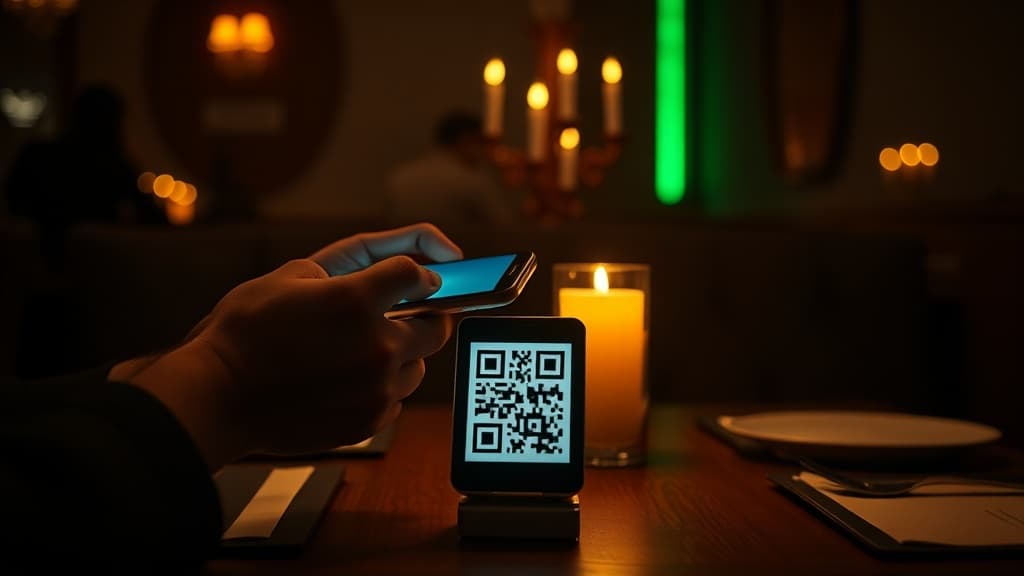
With JamJar, each server carries a personal QR tip code. The guest scans it at the table, taps an amount, and pays by card, Apple Pay or Google Pay, no app, no signup. Then, on the thank-you screen, the venue can add one gentle nudge: 'Loved your visit? Leave us a Google review' with a button that deep-links straight to your Google review form.
Note the sequencing, because it's everything. The guest has already tipped, they've self-selected as a fan, they're mid-goodwill, and the review is one tap away instead of a search-find-scroll expedition later. You're not soliciting reviews from everyone; you're removing friction for exactly the people most likely to leave five stars.
- Guest scans the server's QR and tips in seconds, card, Apple Pay or Google Pay
- Thank-you screen offers the venue's Google review link, one tap away
- Only guests who chose to tip see the nudge, a naturally positive audience
- Private feedback stays private; public praise goes where it counts
Staying on the right side of Google's rules
Google's policy is clear on two things: don't pay or incentivise reviews, and don't 'review-gate' (only asking people you know are happy while actively diverting unhappy ones away from Google). The tip-then-review flow respects both when you set it up properly. The tip is a reward for the server, not payment for a review, the review invitation is optional, uncompensated, and shown after the transaction is complete. And you're making the link available at a well-timed moment, not screening sentiment and hiding the link from critics.
Keep the wording neutral ('Enjoyed your visit? Leave us a Google review') rather than conditional ('If you loved us, review us, if not, tell us privately'). Pair it with an always-open private feedback channel so unhappy guests have somewhere fast to go, not because you're hiding them from Google, but because you actually want to fix things while they're still in the building.
What the numbers look like
Work through a modest example. A 60-cover restaurant doing two services a day might see 500 tables a week. If 25% of tables tip via QR (typical once servers present the code with every bill) that's 125 thank-you screens a week showing your review link. Even a 5% conversion is 6 new reviews weekly, roughly 25 a month, every month, on autopilot.
Against a local rival adding 2–3 reviews a month, you win recency and volume within a quarter. Meanwhile the same scans are paying your team real money: at an average £3–£5 tip, those 125 weekly tips put £400–£600 a week directly into your servers' pockets, a retention story as good as the SEO one. Venues that have rethought the service charge in favour of direct tipping often find the review flywheel is the unexpected bonus.
Setting it up in an afternoon
- Grab your Google review link: Google Business Profile, then 'Ask for reviews', it's a short URL that opens the review form directly.
- Set up your team on JamJar and add the review link to your venue settings so every post-tip screen shows the nudge.
- Print server cards for bill folders: name, QR, one line, 'Scan to tip Amy directly.'
- Brief the team on the one-sentence script and let the flow do the rest.
- Reply to every review, good and bad, within 48 hours, response rate is itself a trust signal Google and guests both notice.
One scan, three wins
It's rare that a single intervention pays three ways, but this one does: servers earn more (tips are paid out to their own bank through Stripe), the venue climbs the local pack (steady stream of fresh reviews), and guests get a ten-second way to say thank you properly. The mechanism costs the venue nothing, JamJar's standard fee is 20% + VAT on tips, dropping to 0% for Jamma subscribers, and the whole thing rides on a gesture guests already know how to make: point camera, scan, tap.
Frequently asked questions
Is it against Google's rules to ask for a review after a tip?+
No. Google prohibits paying for reviews and selectively gating them, not asking at a convenient moment. The tip rewards the server; the review invitation is optional and uncompensated. Keep wording neutral and don't screen out critics, and you're within policy.
Do guests need an app to tip or review?+
No app either way. The tip runs in the browser after a camera scan, card, Apple Pay or Google Pay, and the review nudge is a one-tap link to your Google review form.
How do I find my Google review link?+
In your Google Business Profile dashboard, look for 'Ask for reviews', it gives you a short shareable URL that opens your review form directly. That's the link you add to your JamJar venue settings.
What if an unhappy guest scans the QR?+
Unhappy guests rarely tip, so they rarely see the nudge. More importantly, JamJar includes private feedback, so guests can tell the server or venue what went wrong directly, giving you a chance to fix it before it becomes a public one-star.
How many extra reviews can a restaurant realistically expect?+
It depends on covers and how consistently servers present the QR, but a mid-size venue converting even 5% of tippers typically adds 15–25 reviews a month, several times the organic rate for most independents.