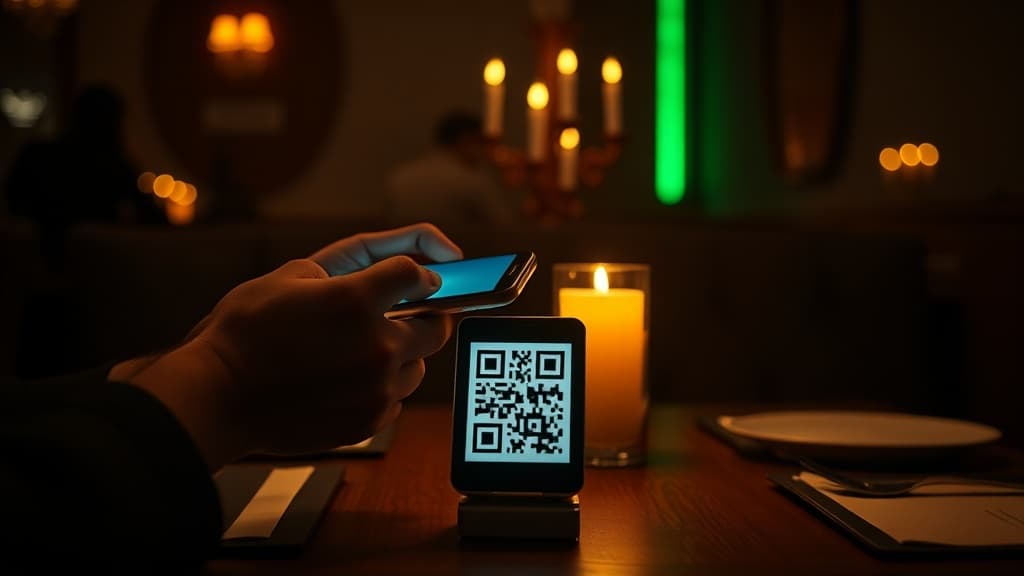
Why QR feedback beats comment cards (and mystery diners)
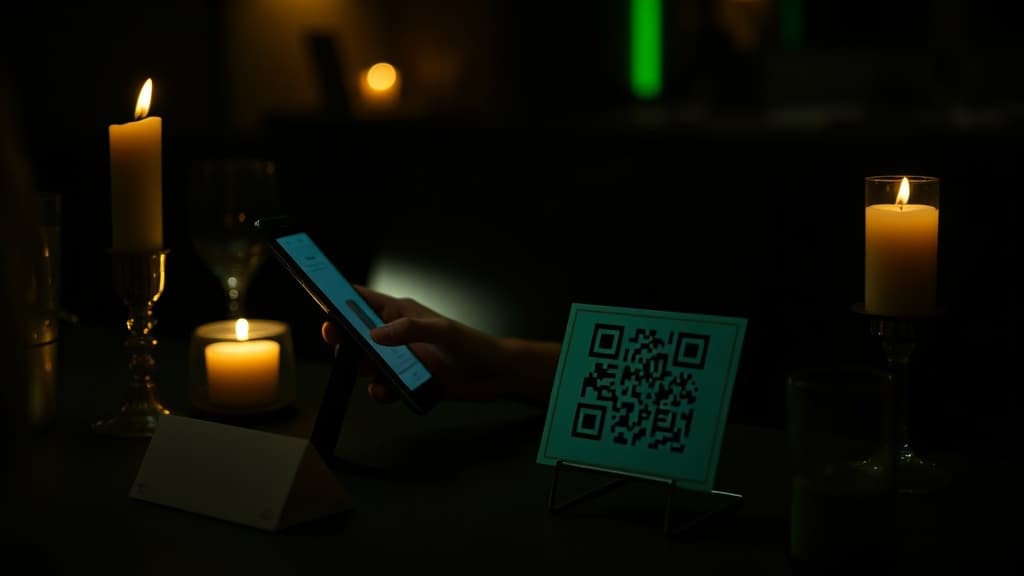
Every restaurant says it wants feedback. Look at the tools, though, and you'd conclude the opposite: a comment card nobody fills in, a 'how was everything?' asked mid-mouthful, and, for the ambitious, a mystery diner report that arrives three weeks after the shift it describes, at £150–£300 a visit.
Meanwhile the feedback that actually moves the needle is being written anyway, on Google, in public, after the guest has gone home angry. The venues getting ahead of this in 2026 have moved feedback to the same place everything else moved: the guest's phone, at the table, via a QR code. Instant, private, and tied to the specific server who delivered the experience.
Why comment cards stopped working (if they ever did)
The comment card fails on every axis that matters. Response rates are vanishingly small, and the sample skews to two groups: the furious and the retired. It's anonymous in the wrong way, you learn 'service was slow' but not which section, which shift or which server. It's slow, cards get collected, typed up (maybe), discussed at a monthly meeting (occasionally). And it's public-ish: filling in a card at the table, under the server's eye, guarantees polite fiction. Most guests will write 'lovely, thank you' to a server they're about to describe very differently on Google.
The trouble with mystery diners
Mystery dining solves the honesty problem but creates three new ones. Cost: at £150–£300 per assessed visit, most independents afford a handful a year. Sample size: two visits a quarter tells you how two meals went, not how your restaurant performs across 500 covers a week, one under-seasoned soup swings the whole report. Latency: by the time the write-up lands, the rota has changed, the special is gone and the moment to coach anyone has passed.
Mystery diners still have a place for auditing standards and brand compliance across multiple sites. But as a feedback engine for a single venue, you're paying consultancy rates for a sample of two.
A mystery diner tells you how two meals went last quarter. QR feedback tells you how tonight is going, while you can still fix it.
What QR feedback does differently
With JamJar, every server carries a personal QR code, on a badge or presented with the bill. Guests scan it to tip by card, Apple Pay or Google Pay, and alongside the tip (or without one) they can leave a rating and a short message. No app, no signup, ten seconds of the guest's time. Three properties make this categorically better than the old tools:
- Instant. Feedback arrives during or minutes after the visit, not at month-end. A pattern of 'mains took forever' on a Friday night is visible while the kitchen can still respond.
- Private. Ratings and messages go only to the recipient, never published, never public. Guests are dramatically more honest when they know they're not performing for an audience, and more generous too: private channels collect praise that guests would feel awkward posting.
- Per-server. Because each QR belongs to one person, feedback maps to the individual, not 'the restaurant'. Amy learns her tables adore her wine picks; a struggling new starter gets specific, early, kindly-delivered signal instead of a bad quarterly average.
The complaint you catch is the 1-star you never get
Here's the commercial heart of it. An unhappy guest has two paths: tell you, or tell Google. Every barrier you put on the 'tell you' path, find a card, find a pen, flag someone down, be brave enough to complain out loud, diverts them to the public one. Service-recovery research has said the same thing for decades: guests whose complaint is handled well come back at higher rates than guests who never had a problem, but only a small fraction ever complain to the business.
A private QR channel drops the barrier to almost nothing. The guest who'd never make a scene will happily type 'table wobbly, waited 20 mins for drinks' from behind their phone. That message reaching a server or manager during the visit is worth a free dessert and an apology; the same words appearing on Google next morning cost you dozens of future covers. On a rating that feeds directly into local search visibility, one intercepted complaint a week is a serious return on a printed QR code.
Feedback and tips: better together
Bundling feedback with tipping isn't a gimmick, it fixes the incentive problem both tools have alone. Feedback-only kiosks feel like homework, so nobody uses them; tipping-only flows capture money but no signal. Combined, the guest is already mid-gesture, they scanned to say thank you, and adding 'the sea bass was superb, Amy was brilliant' takes five more seconds. Tips are paid out to each server's own UK bank through Stripe, and the private messages arrive alongside them, which turns feedback from something staff fear into something they actively look forward to reading after a shift.
For the venue, the aggregate picture is the management prize: which servers collect glowing messages, which shifts generate friction, whether the new menu is landing, assembled from hundreds of real guests, not two mystery visits. And for the delighted guests, the same flow can nudge them on to your public Google review link, where their enthusiasm does marketing work.
Rolling it out this month
- Set each front-of-house team member up with their own JamJar QR, self-serve setup, a few minutes each, no cost to the venue.
- Put the code where the decision happens: bill folders and badges beat posters by the door.
- Script one sentence: 'If you'd like to tip or leave any feedback, just scan this, it comes to me.'
- Agree the recovery loop: any negative message during service goes to the duty manager for a table visit before the guest leaves.
- Review weekly, not quarterly: fifteen minutes on the patterns, praise worth sharing at briefing, friction worth fixing.
Where the old tools still fit
None of this makes every legacy tool worthless. Multi-site groups will keep mystery audits for compliance; a post-visit email survey still suits bookings-led venues. But as the always-on feedback layer, the thing that tells you how tonight went, table by table, server by server, the QR in the bill folder has simply outclassed the card next to it. It's cheaper (free, versus printing cards or paying assessors), faster (minutes, not weeks), more honest (private, not performed) and more actionable (a name attached, not a vague average). And unlike every feedback tool before it, this one pays your staff while it works.
Frequently asked questions
Do guests have to tip to leave feedback?+
No. The tip and the feedback travel through the same QR scan, but guests can leave a rating and message without tipping, and tip without writing a word. Most do at least one once the server presents the code naturally.
Is the feedback public like a review?+
No, that's the point. Ratings and messages are private to the recipient, so guests are honest and staff get candid coaching without public exposure. Public praise is handled separately, via an optional nudge to your Google review link after tipping.
How is this better than a table-talker survey QR?+
Generic survey QRs collect anonymous venue-level data with weak response rates because there's nothing in it for the guest or the moment. JamJar's QR is personal to the server and doubles as their tip jar, so guests actually scan it, and every piece of feedback maps to a specific person and shift.
What does it cost compared with mystery diners?+
Mystery dining runs £150–£300 per visit. JamJar costs the venue nothing, the platform fee is 20% + VAT on tips (0% for Jamma subscribers), and the feedback channel comes with it. You get hundreds of real guest data points a month instead of a handful of staged ones a year.
Can managers see feedback left for individual servers?+
Messages are private to the recipient by design, that honesty is what makes guests write them. The practical pattern is a team norm of sharing themes at briefings, plus the venue-level signals for spotting shift-wide issues.