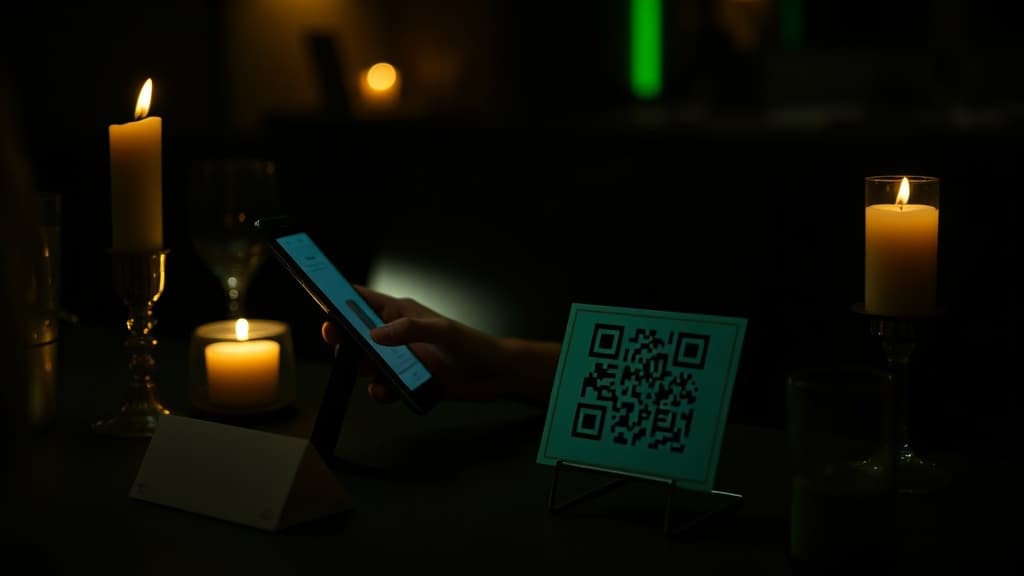
Individual QR tip codes for servers: how they work
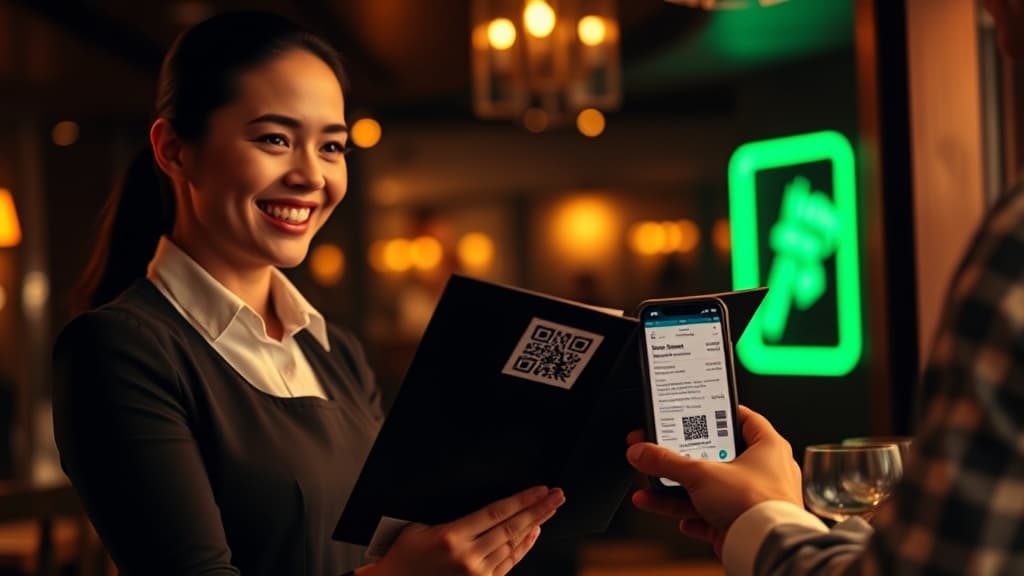
Barely one in five UK guests carries cash any more, and pooled service charges pay your best server the same as your weakest. Individual QR tipping fixes both problems at once: every member of staff gets their own personal QR code, guests scan it at the table, and the tip lands with that server, not a communal pot.
It's the hospitality version of the busker's card reader, and it's quietly spreading through UK restaurants, cafés, pubs and hotels. Here's exactly how it works, what it costs, and how to roll it out without disrupting a single shift.
The 30-second version
With a digital tip jar like JamJar, each server signs up once, connects their own UK bank account via Stripe, and gets a unique QR code. That code goes on a badge, a card in the bill folder, or a small stand. When a guest wants to say thank you, they point their phone camera at the code, tap an amount, and pay by card, Apple Pay or Google Pay. No app to download, no account to create, no cash required. The whole thing takes about ten seconds, less time than finding a cash machine ever did.
Why individual beats pooled
A pooled tip is anonymous by design: the guest thanks 'the restaurant' and the tronc divides it by formula. An individual tip is personal, the guest thanks a person, and that person keeps it. That single change does a lot of work:
- Real incentive. Servers see a direct line from great table service to their own earnings that same night, the 'work for tips' effect that pooled charges erase.
- Fairness your team can see. Nobody argues about tronc points when the guest chose exactly who to reward.
- Recruitment edge. 'Keep your own tips, paid to your own bank' is a genuinely attractive line in a job ad in 2026.
- Zero admin for the venue. Tips never touch your books, they are paid by the guest through Stripe to the server's own account. Take your own advice on how your venue records them.
Step-by-step: what the guest experiences
From the guest's side, the flow is deliberately boring:
- Their server presents the bill with a small card: 'Served by Amy, scan to tip Amy directly.'
- The guest opens their phone camera and scans the QR (no app, no signup).
- Amy's page appears with her name and photo, plus quick amounts, say £2, £5, £10, and a custom option.
- The guest taps an amount and confirms with Apple Pay, Google Pay or card. Done in seconds.
- They can add a private message ('Amy was brilliant with our toddler!') and, if they're clearly delighted, get a gentle nudge to leave the venue a Google review.
Step-by-step: what the server does
Setup is a one-off, self-serve job that takes a few minutes: create a JamJar profile, verify identity and connect a UK bank account through Stripe (the same regulated onboarding used by millions of businesses), and download or print the personal QR code. After that, the server just wears or presents the code. Tips accumulate in their JamJar and pay out to their own bank, they can watch tips arrive shift by shift, along with any private feedback messages, which only they can see.
Because each account belongs to the individual, the code follows them, not the venue. A server who works Friday nights at your restaurant and weekend weddings with a function band uses the same tip jar for both.
What it costs
JamJar charges a 20% + VAT platform fee on tips as standard, which covers card processing, Stripe payouts, hosting and support, and drops to 0% for Jamma subscribers, meaning the server keeps everything after card fees. There's no hardware to buy (the QR is just a printout or badge), no monthly terminal rental, and no cost to the venue. Compare that with the invisible cost of the status quo: cash tips that no longer happen because nobody carries cash, and pooled charges that your best people quietly resent.
Rolling it out across a venue
You can pilot this with two or three volunteers in a single week. For a full rollout:
- Get every front-of-house team member set up before launch night, the Stripe onboarding is self-serve but do it together at a team briefing.
- Standardise the presentation: same card design in every bill folder, server's first name printed large, one line of instruction.
- Brief the script: 'If you'd like to tip, you can scan this and it comes to me.' Guests respond far better when the mechanism is explained in one natural sentence.
- Update your written tipping policy to describe how individual digital tips work alongside any remaining service charge, the UK tipping rules expect transparency even where tips go direct to staff.
- Review after four weeks: tips per server, guest comments, and whether service scores moved.
Common objections, answered
'Won't it create competition between staff?' Some, and mostly the healthy kind. If you're worried, teams can agree a voluntary share for runners and kitchen. The difference from a tronc is that sharing is the team's choice, not an imposed formula.
'Our guests won't scan QR codes.' Post-2020, they will, QR menus normalised the gesture across every age group. The venues that struggle are the ones that hide the code; the ones that succeed present it with the bill, every table, every time.
'We already add a service charge.' The two can coexist, though many operators are now rethinking the service charge entirely. A common hybrid: keep a smaller charge for back of house, and let guests reward front of house individually on top.
Frequently asked questions
Does the guest need to download an app or create an account?+
No. The guest scans the QR with their phone camera and pays by card, Apple Pay or Google Pay in the browser. No app, no signup, roughly ten seconds start to finish.
Where does the money actually go?+
Directly to the individual server. Each staff member connects their own UK bank account via Stripe during setup, and their tips pay out to that account, the venue never handles the money.
Is the server responsible for tax on individual tips?+
Digital tips paid directly to an individual are the individual's income, and they're responsible for declaring them to HMRC (typically via Self Assessment or a tax code adjustment). Having every tip on a digital record actually makes this easier than cash ever was. This isn't tax advice, check gov.uk or an accountant.
Can guests still leave feedback with their tip?+
Yes, guests can add a rating and a private message with any tip. Feedback is visible only to the recipient, so it works as honest, instant coaching rather than public commentary.
What does JamJar cost the venue?+
Nothing. The platform fee is 20% + VAT on each tip as standard, and 0% for Jamma subscribers. There's no hardware, no rental and no charge to the business.