Should your restaurant scrap the service charge?

The 12.5% discretionary service charge has become the default in UK restaurants, so default, in fact, that most guests barely notice it and most servers barely feel it. It arrives on every bill regardless of whether the service was outstanding or merely fine, gets pooled, run through a tronc, and lands in pay packets weeks later as a flat top-up.
A growing number of operators are asking an awkward question: if everyone gets the same share whatever happens at the table, what exactly is the service charge incentivising? Some are now trialling scrapping it entirely, and replacing it with individual, direct tipping. Here's how to think it through for your own venue.
How the service charge actually works today
A typical UK restaurant adds a discretionary 12.5% service charge (some London venues have crept to 15%). Since the Employment (Allocation of Tips) Act came into force in October 2024, 100% of that charge must be passed to workers, allocated fairly and transparently, usually via a tronc scheme run by a troncmaster.
In practice, most troncs split by hours worked, sometimes weighted by role, a points system where a senior server earns more points per hour than a runner. What almost no tronc does is weight by how well any individual actually served their tables that week. The guest who leaves delighted and the guest who leaves annoyed both paid the same 12.5%, and it all goes into the same pot.
The problem: equal split, equal effort
Pooling has genuine virtues, it rewards the kitchen, smooths out bad shifts, and stops squabbles over who got the big table. But it also does something quietly corrosive: it severs the link between an individual's performance and their pay.
Your best server, the one who remembers regulars' names, upsells the second bottle, and turns a wobbly table around, earns the same tronc share per hour as the colleague coasting through the shift. Over months, that maths teaches your stars that going the extra mile is a donation to the team, not an investment in themselves. Economists call it the free-rider problem. Hospitality managers call it Tuesday.
When every tip is split equally, great service becomes a gift to the pool, not a reward for the person who earned it.
The case for scrapping it
Restaurants trialling a no-service-charge model tend to report three things. First, guests like it, a bill with no added 12.5% feels honest, and removing the charge removes the single most disputed line on the receipt. Second, service sharpens. When a server's tips depend on their own tables, the 'work for tips' mentality kicks in: faster check-backs, warmer welcomes, genuine recommendations. Third, your best people earn more, which makes them dramatically easier to keep in a sector where staff turnover still runs at 30%+ a year.
The obvious worry is that voluntary tips won't replace the charge. The evidence from venues using individual QR tipping is encouraging: when tipping is made effortless, scan, tap, done, by card or Apple Pay, a large share of guests tip, and they tip generously for service they actually enjoyed. The difference is that the money now tracks performance rather than turnover.
The case for keeping it (and fixing it instead)
Scrapping the charge isn't right for everyone. If your model depends on the service charge to fund back-of-house pay, removing it overnight blows a hole in kitchen earnings, chefs don't get scanned at the table. High-volume venues with team service (multiple staff touching every table) also lose less to pooling, because no single server 'owns' the guest experience.
If that's you, the halfway house is to keep a smaller charge, say 10% ring-fenced for back of house, and layer voluntary individual tipping on top for front of house. Guests who had a great experience with a specific person can reward that person directly, and nobody's base expectations change.
What the alternative looks like in practice
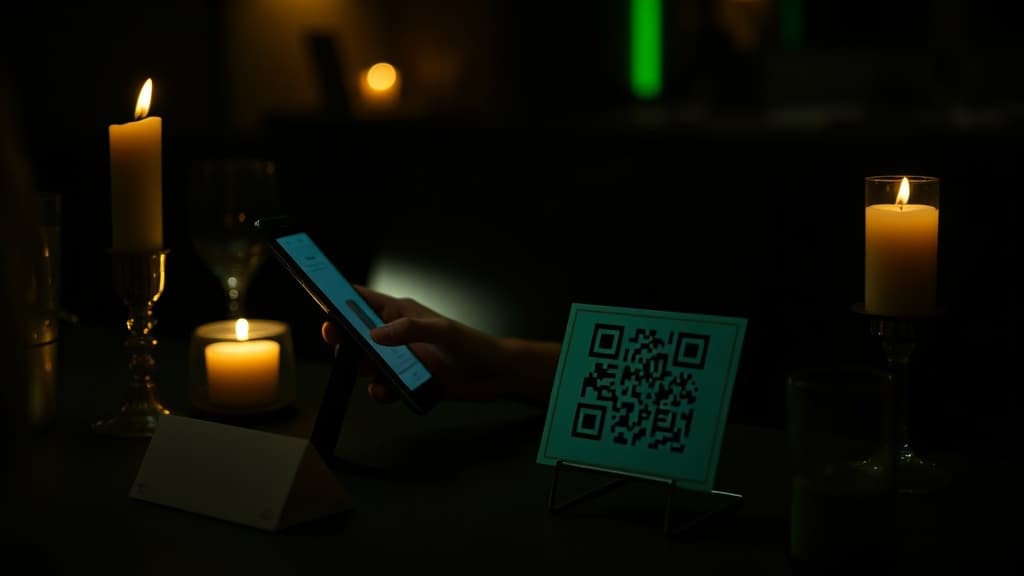
With a digital tip jar like JamJar, each server gets their own personal QR code, on a badge, a card presented with the bill, or the table talker. A happy guest scans it with their phone camera, taps an amount, and pays by card, Apple Pay or Google Pay in about ten seconds. No app to download, no signing up.
The money goes to that server, not a pool, each staff member connects their own UK bank account via Stripe, so payouts are direct and there's nothing for the venue to administer or account for. Guests can also leave a private word of feedback with the tip, and the venue can add a nudge towards its Google review link for guests who clearly loved the visit.
- Guest pays by card, Apple Pay or Google Pay, no app, no account
- Tips route directly to the individual server's own bank via Stripe
- Private feedback comes with the tip, visible only to the recipient
- Optional Google-review prompt after tipping turns delight into local SEO
- 20% + VAT platform fee as standard, 0% for Jamma subscribers
How to trial it without betting the restaurant
You don't need to make a permanent decision. Run it as a controlled experiment:
- Pick one site (or one month) and drop the service charge, announcing it clearly on menus: 'We don't add a service charge, if someone made your evening, tip them directly.'
- Give every front-of-house team member their own QR code before the trial starts.
- Agree a back-of-house arrangement up front, e.g. servers voluntarily share a fixed slice, or you adjust kitchen pay, and put it in your written tipping policy.
- Track four numbers weekly: average tip per cover, spread between your best and weakest tippers-in, guest complaints about the bill, and staff sentiment.
- Compare against a matched period with the service charge. Let the data decide.
The bottom line
The service charge isn't evil, it's just blunt. It taxes every guest identically and pays every worker identically, which is precisely why it does nothing for service quality. If your venue lives or dies on the guest experience, letting guests reward the individual who delivered it is the more honest, and more motivating, model. Whatever you choose, make sure your allocation policy is written down and compliant with the 2026 tipping rules.
Frequently asked questions
Is the service charge compulsory for guests in the UK?+
No. A 'discretionary' service charge can always be removed at the guest's request. Only a genuinely compulsory charge (clearly stated before ordering) must be paid, and it's rare in practice.
If we scrap the service charge, do staff lose out?+
Not necessarily. Venues that replace it with frictionless individual QR tipping generally find strong performers earn as much or more, because tips track service quality rather than being averaged across the team. Weaker performers feel the difference, which is rather the point.
What happens to kitchen staff without a pooled service charge?+
That's the biggest design decision. Options include keeping a smaller ring-fenced charge for back of house, a voluntary agreed share from front-of-house tips, or adjusting kitchen base pay. Whatever you choose must be written into your tipping policy.
Do individually received digital tips still fall under the Tips Act?+
Tips a customer pays directly to a worker, which the employer never receives or controls, sit outside the employer's allocation duties. But you should still maintain a written policy covering how tipping works in your venue. This isn't legal advice, check the statutory Code of Practice.
Won't guests just tip less than 12.5%?+
Some will, some will tip more. The honest framing is that a service charge is a fee, while a tip is a verdict. Venues confident in their service tend to come out ahead; venues that aren't probably have a bigger problem than billing mechanics.