How buskers can take card payments in the UK (2026 guide)

Every busker knows the moment: someone stops, listens to a full song, smiles, pats their pockets, mouths 'sorry, no cash', and walks on. Multiply that by every set, every pitch, every weekend, and it is the single biggest leak in a street performer's income. With cash now used for roughly one in ten UK payments, the crowd that wants to pay you mostly cannot.
The fix is going cashless, but busking has constraints a pub gig does not. No power, no staff, unpredictable weather, and hands that are literally full. This guide covers the realistic options for UK buskers in 2026, what they cost, and how to build a street setup that survives a British drizzle.
Why cashless matters even more for buskers
A venue act gets a fee whatever the jar holds; a busker's tips are the whole pay packet. That makes the cash decline existential for street performers in a way it is not for anyone else. UK studies of contactless busking trials have consistently found that performers offering a digital option earn noticeably more per session than cash-only pitches, not because crowds got more generous, but because the majority who carry no cash could finally participate.
There is a second-order effect too: a visible cashless option signals professionalism. Passers-by read a clean QR sign the way they read a good amp and a tuned guitar, this person takes it seriously, and that perception alone nudges tips upward.
Option 1: the QR code tip jar
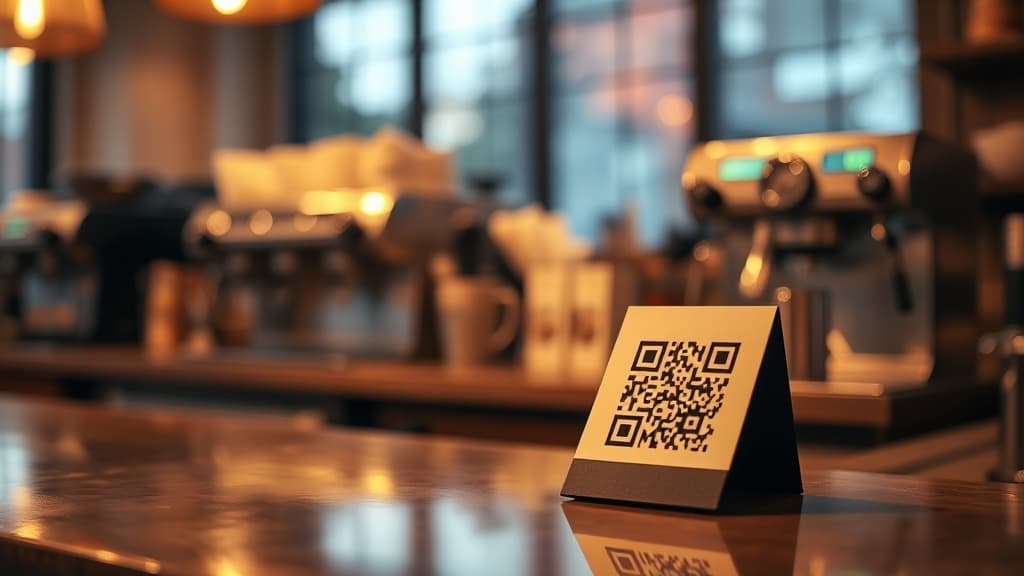
For most buskers this is the best fit, because it demands nothing from you mid-song. You display a printed QR code; a passer-by scans it with their phone camera; a tipping page opens and they pay by card, Apple Pay or Google Pay in seconds, no app, no sign-up, no interaction needed from you beyond a nod and a thank you.
With JamJar the jar is free to set up: connect a UK bank account once via Stripe, download your code, print it. Tips can be withdrawn to your bank in 2–3 business days. Fans can also leave a rating and a message with their tip, and for a busker, messages like 'heard you outside the station, made my morning' are both fuel for the soul and quotable proof when you chase paid bookings. The standard fee is 20% (+VAT), or 0% if you subscribe to Jamma Premium.
Crucially for street work: no battery, no signal requirement on your side, no hardware to charge or steal. The code is just ink on paper (or a screen if you prefer). If it rains, you laminate it. If it walks off, you print another.
Option 2: contactless card readers on the street
Tap-to-tip card readers (SumUp, Zettle, Square, £20–£120 plus 1.5–2.5% per transaction) do appear on UK pitches, sometimes mounted on a stand with a fixed amount. They work, but the street exposes their weaknesses: they need charging and a data connection, a fixed tip amount caps generous tippers, changing the amount means stopping playing, and an unattended £100 gadget on a busy high street is a temptation you have to manage all day.
Some full-time buskers run both, a fixed-amount reader for the tap-and-go crowd, a QR code for everyone else. If you only carry one, carry the one that cannot run out of battery.
Building a weatherproof street setup
British weather eats paper signs. A street-ready QR setup is cheap but deliberate:
- Print the code A5 or larger and laminate it, or slip it into a waterproof menu holder, total cost under £5.
- Mount one copy at standing eye level (mic stand, easel, A-board) and one low in the case for people who approach.
- Add three or four words of instruction: 'Scan to tip, takes 10 seconds'. Never assume everyone knows what a QR code does.
- Angle the sign away from direct low sun; glare off lamination can beat a phone camera.
- Carry a spare printed code in your gig bag. Ink and paper are the cheapest insurance in music.
Licensing, pitches and staying legal
Busking is broadly legal in England and Wales without a licence, but the detail is local. Some areas run permit or consent schemes (parts of London such as Camden, plus a number of city centres), others have voluntary codes covering amplification, pitch duration and spacing. Scotland and Northern Ireland have their own local arrangements. Always check the council website for the town you are playing, five minutes of reading beats a moved-on afternoon.
Cashless changes none of this: a QR sign is treated no differently from a hat. What it does change is your records, every digital tip is logged, which matters for the next section.
Tax for buskers, briefly
Busking income, including tips, is taxable in the UK. If you earn under £1,000 a year from it, the trading allowance may cover you without registering; beyond that you register as self-employed and declare it through self-assessment. Digital tips make this dramatically easier, a clean payment history instead of estimating coin-bucket totals from memory.
This is genuinely a benefit, not a burden: documented income is what lets a busker get a mortgage reference, a loan, or proof of professional standing. Cash-in-hand busking never gave you that. For the wider picture on fees and payment methods, see our cashless tipping guide for musicians.
From street pitch to paid bookings
The street is the best audition in the world, thousands of people hear you for free, and cashless tipping turns it into a funnel. Every scan puts your name and page in front of a potential booker: wedding planners, pub landlords and party organisers walk past buskers every day. The ratings and messages your tippers leave become a public track record of crowds you have genuinely won over.
The results speak for themselves: performers using JamJar have seen real money follow the QR code, one band earned their biggest-ever fee at a London gig, and at Wokingham Festival every artist on a JamJar-run stage earned extra plus a stream of crowd feedback. Put that record next to a profile on Jamma Music and street sets start converting into booked, fee-paying gigs. For stagecraft that lifts tips whatever the setting, our guide to getting more tips at gigs applies on the pavement too.
The high street is a free audition in front of thousands. A QR code is how you collect the applause.
Frequently asked questions
Do buskers need a licence to accept card payments in the UK?+
No, the payment method changes nothing legally. Busking itself is broadly legal in England and Wales, but some councils run permit schemes or codes of conduct, so check the local rules for each town you play.
What is the cheapest way for a busker to go cashless?+
A QR code tip jar: setup is free, the 'hardware' is a laminated printout costing under £5, and there is nothing to charge or steal. JamJar takes 20% (+VAT) per tip, or 0% for Jamma Premium subscribers.
Can people tip a busker without an app?+
Yes. Scanning the QR code opens a web page where they pay by card, Apple Pay or Google Pay in seconds, no app download and no account needed.
Do buskers pay tax on tips?+
Yes, busking income including tips is taxable. Under £1,000 a year may fall within the trading allowance; above that you declare it via self-assessment. Digital tips give you a clean record, which makes this much easier.
Do buskers really earn more with contactless tipping?+
UK contactless busking trials have consistently shown higher earnings per session versus cash-only, simply because the large majority of passers-by who carry no cash can finally tip.